
Assessment Centre Tips: How to Stand Out
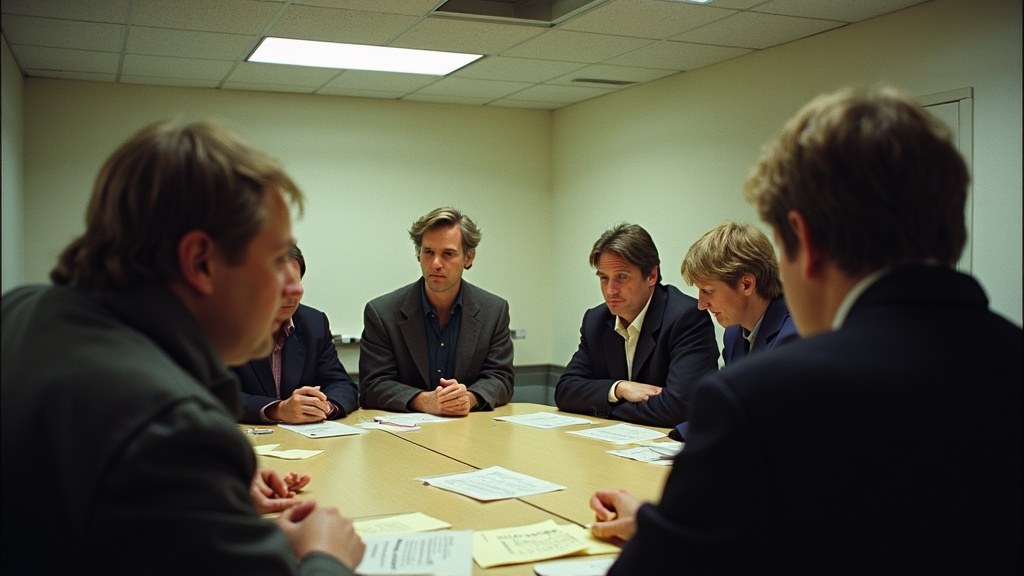
An assessment centre is a strange day. You are being watched for several hours by people taking notes, alongside candidates who are competing with you but who you also have to work with.
The good news is that assessment centres are the most predictable stage of any recruitment process. They are built around a fixed competency framework, and once you understand how that scoring works the day becomes much easier to prepare for.
They Are Scoring Against a Grid
Assessors are not forming a general impression. They are holding a matrix of competencies, and each exercise is designed to produce evidence against specific ones.
Typically you will be scored on things like communication, analysis, decision making, teamwork, resilience and commercial awareness. Each exercise targets three or four of them, and the same competency appears in more than one exercise so a weak performance in one place can be recovered.
This has a practical consequence. If you say nothing during the group exercise, the assessor cannot score you, and an absent score is worse than an average one. Presence matters more than brilliance.
The Group Exercise
This is the one candidates fear, and it is the one where the most obvious mistakes happen.
Assessors are watching how you work with others, not whether your idea wins. The behaviours that score well are bringing quiet people in, building on what someone else said, keeping the group to time, and summarising when the discussion drifts.
The behaviours that score badly are dominating, talking over people, restating your point louder, and going silent when someone disagrees with you.
Volunteering to keep time or take notes is a reliable way to be useful and visible without needing to be the loudest. Just do not let note-taking become an excuse to stop contributing.
One specific piece of advice: if the group is heading for a decision you disagree with and time is short, say so once, clearly, and then support the group. Assessors mark both the challenge and the ability to move on.
The Presentation
You will usually get a topic in advance or half an hour to prepare on the day.
Structure carries more weight than content. A simple opening that says what you will cover, three clear points, and a conclusion that returns to the question will outperform something more sophisticated that rambles. Assessors are marking clarity under time pressure.
Keep to time strictly. Overrunning is scored down almost everywhere, and it is entirely within your control. Practise out loud rather than in your head, because everything takes longer when spoken.
Expect questions afterwards and treat them as part of the exercise, not an afterthought. Handling a challenge well often scores higher than the presentation itself.
The In-Tray or Case Exercise
You get a stack of emails, documents and requests, and not enough time to deal with all of it. That is deliberate.
The exercise is testing prioritisation, and the marks go to people who make explicit decisions and justify them. Work through it by deciding what is urgent, what is important, what can be delegated and what can wait, and write down your reasoning as you go.
Deliberately leaving something undone, with a note explaining why, scores better than a scrambled attempt to touch everything.
Psychometric and Ability Tests
Numerical, verbal and logical reasoning tests are timed and standardised. Practice genuinely improves your scores, because familiarity with the format removes a large chunk of the time pressure.
Do practice tests under real timed conditions before the day. Free versions are widely available and the specific publisher often gets named in your invitation email.
Personality questionnaires are different and cannot be revised for. Answer them consistently and honestly. They usually contain internal consistency checks, and candidates who try to present an idealised profile trigger them.
The Informal Parts Are Not Informal
Lunch, coffee breaks and the walk between rooms are all observed. Not necessarily formally scored, but noticed and reported.
This is where people relax and complain about an exercise, criticise another candidate, or become noticeably different in manner. Assume the day starts when you arrive and ends when you leave the building.
The same applies to how you treat reception staff and the person handing out the paperwork. That feedback reaches the panel more often than candidates realise.
Prepare the Way You Would for an Interview
Everything you would do for a standard interview still applies. Research the organisation, understand the role, and have your examples ready, because there is almost always a conventional interview somewhere in the day.
Prepare four or five strong stories covering leadership, conflict, failure, pressure and achievement, structured so you can deliver them cleanly. Our guides on the STAR method and how to prepare for an interview cover the preparation that carries over.
The Role Play Exercise
Not every centre includes one, and candidates who meet it unprepared tend to struggle.
You are given a scenario and a briefing, then an actor or an assessor plays a customer, a direct report or a colleague. Common versions are an underperforming team member, an angry client, or a stakeholder resisting a decision.
Two things decide the score. First, whether you ask questions before offering solutions, because candidates who arrive with an answer and deliver it regardless of what the other person says score badly across every framework. Second, whether you stay professional when the actor makes it difficult, which they will, deliberately.
Commit to the scenario. Half-playing it, with asides to the assessor about what you would really do, wastes the exercise. Treat the person in front of you as the person they say they are and have the conversation properly.
What Happens Between Exercises
Assessors compare notes at the end of the day in a session where each candidate is discussed and scores are agreed. Evidence from one exercise is weighed against evidence from another, and disagreements are resolved by going back to what was actually observed.
This is why specific, memorable contributions matter more than general good behaviour. An assessor arguing your case needs something concrete to point at, and “she was pleasant” carries no weight against “he identified the cost problem nobody else spotted”.
It is also why one poor exercise rarely sinks you. If you have given clear evidence elsewhere, the panel has something to balance it with.
Ask for Feedback Afterwards
Assessment centres generate more feedback than any other selection method, because everything was scored against a defined framework.
Ask for it whatever the result, and ask for it by competency rather than in general. Many employers will give you your scores, and a breakdown showing you were strong on analysis and weak on influencing is genuinely actionable in a way that a polite rejection is not.
If you are unsuccessful, that breakdown is also the thing that makes a future application to the same employer credible. Our guide on reapplying to a company that rejected you covers how to use it.
Practical Things That Help
Eat properly beforehand, because these days are long and performance drops noticeably in the afternoon. Take water. Take a pen and paper even if they provide them.
Ask about the format when you accept the invitation. Most employers will tell you which exercises are included, and some will send the competency framework if you ask. That is not cheating, it is preparation, and the candidates who do it are usually the ones who get offers.