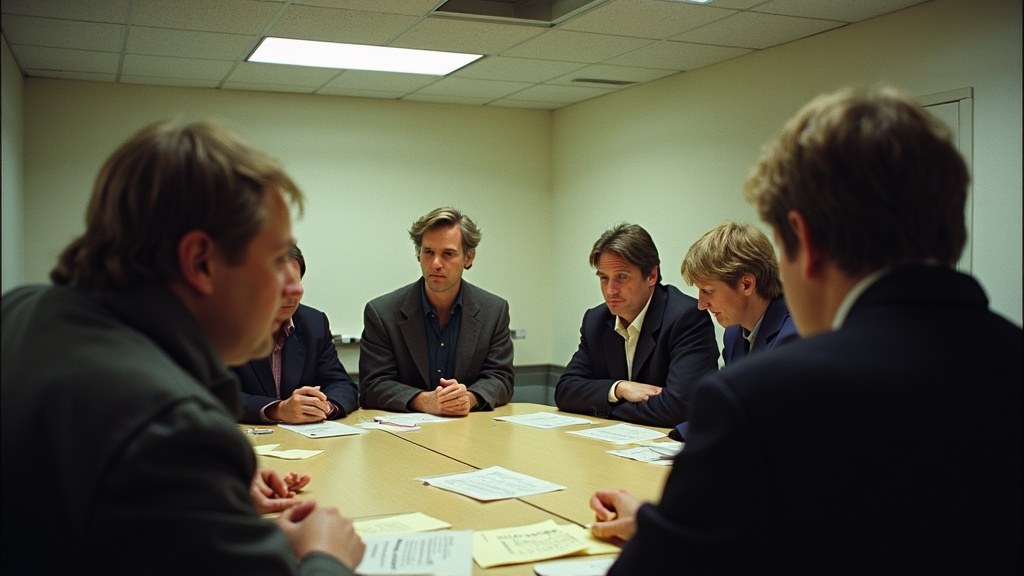
How to Handle Interview Rejection

Getting to interview and then being turned down is harder than a silent rejection at application stage. You met people, you invested hope, and you probably know exactly which answer you would change.
It is also completely routine. Most roles interview between three and six people and appoint one, which means the majority of interviews end this way for everybody, including people who are very good at their jobs.
The First Hour
Do not reply immediately. Whatever you write in the first hour will carry more feeling than you intend, and it will be read by someone who may hire you later.
Give it a few hours, then send a short, genuinely gracious reply. Thank them for their time, say you enjoyed learning about the role, and ask to be considered for anything suitable in future.
This is not politeness for its own sake. Second choice candidates get called back surprisingly often, when the first choice declines, resigns early, or the team expands. That call goes to the person who responded well.
Ask for Feedback Properly
Most candidates either do not ask or ask in a way that gets a non-answer.
Ask in the same reply, keep it specific, and make it easy to answer. A general request for feedback invites a vague response about a strong field. A specific request, naming one or two areas you would like to develop, gives them something concrete to respond to.
Asking whether there was a particular area where you were less strong than the appointed candidate is direct without being confrontational, and it tends to produce a real answer.
If you were placed through an agency, ask the recruiter instead. They often get far more candid feedback than the employer will give you directly.
Accept that some organisations will not give feedback at all, usually for legal caution rather than rudeness. Do not push twice.
Take the Feedback Seriously, Then Weigh It
Feedback from a single interview is one data point from people who spent an hour with you. It is useful and it is not a verdict.
If you hear the same thing from three separate processes, that is a pattern and it deserves work. If one panel said you were too detailed and another said you did not go deep enough, that is variation between interviewers and you should not rebuild your approach around either.
The most common genuinely useful feedback is about evidence: that answers were general, that examples were thin, or that a specific area of experience was not demonstrated. All three are fixable with preparation rather than talent.
Work Out Which Stage Is Failing
If rejections are stacking up, diagnose where rather than despairing generally.
If you rarely get interviews, the problem is the CV and the targeting, not your interview technique, and our guide on common CV mistakes is the place to start. If you get interviews and never get past the first, it is usually preparation or the way you structure answers. If you consistently reach final stages and lose, you are close, and the difference is often specific evidence or simply the internal candidate.
Each of those has a different fix, and treating a shortlisting problem as an interview problem wastes months.
Do Not Read Too Much Into One Loss
A great many rejections have nothing to do with you.
Internal candidates who were always going to get it. A restructure that changed the role. A candidate who had done the exact job before. A budget that shrank between advert and offer. Panels do not usually explain these, and candidates fill the silence with self-criticism.
If you performed well and were beaten by someone with more directly relevant experience, there was no version of that interview where you won. That is worth accepting rather than replaying.
Keep the Relationship Alive
For an employer you genuinely wanted, this rejection is the start of something rather than the end.
Connect with the interviewer professionally. Keep an eye on their vacancies. If you close the gap they identified, that becomes an excellent reason to get back in touch in six months. Our guide on reapplying to a company that rejected you covers how to write the second approach.
Repeat applicants who have visibly acted on feedback are a strong proposition, and hiring managers remember them.
Protect Your Momentum
The practical risk after a rejection is that applications stop for a fortnight while you recover.
The best insurance is to always have several processes running. Being down to one hope makes every rejection enormous. Having four live applications makes each one ordinary.
Set a sustainable weekly target and keep to it on the bad weeks as well as the good ones. Job hunting rewards consistency far more than intensity, and the people who get there are usually the ones who kept a steady rate going rather than the ones who did fifty applications in a fortnight and then stopped.
And If It Keeps Happening
If you have had six or more interviews without an offer, get someone else involved. Ask a contact in your sector to run a practice interview and be honest with you, or get a professional review of how you are presenting yourself.
You are close enough that people keep choosing to meet you. The gap is usually small and specific, and it is much easier for someone else to spot than it is for you.